

Abbreviations in Medical Writing: Best Practices for Clarity
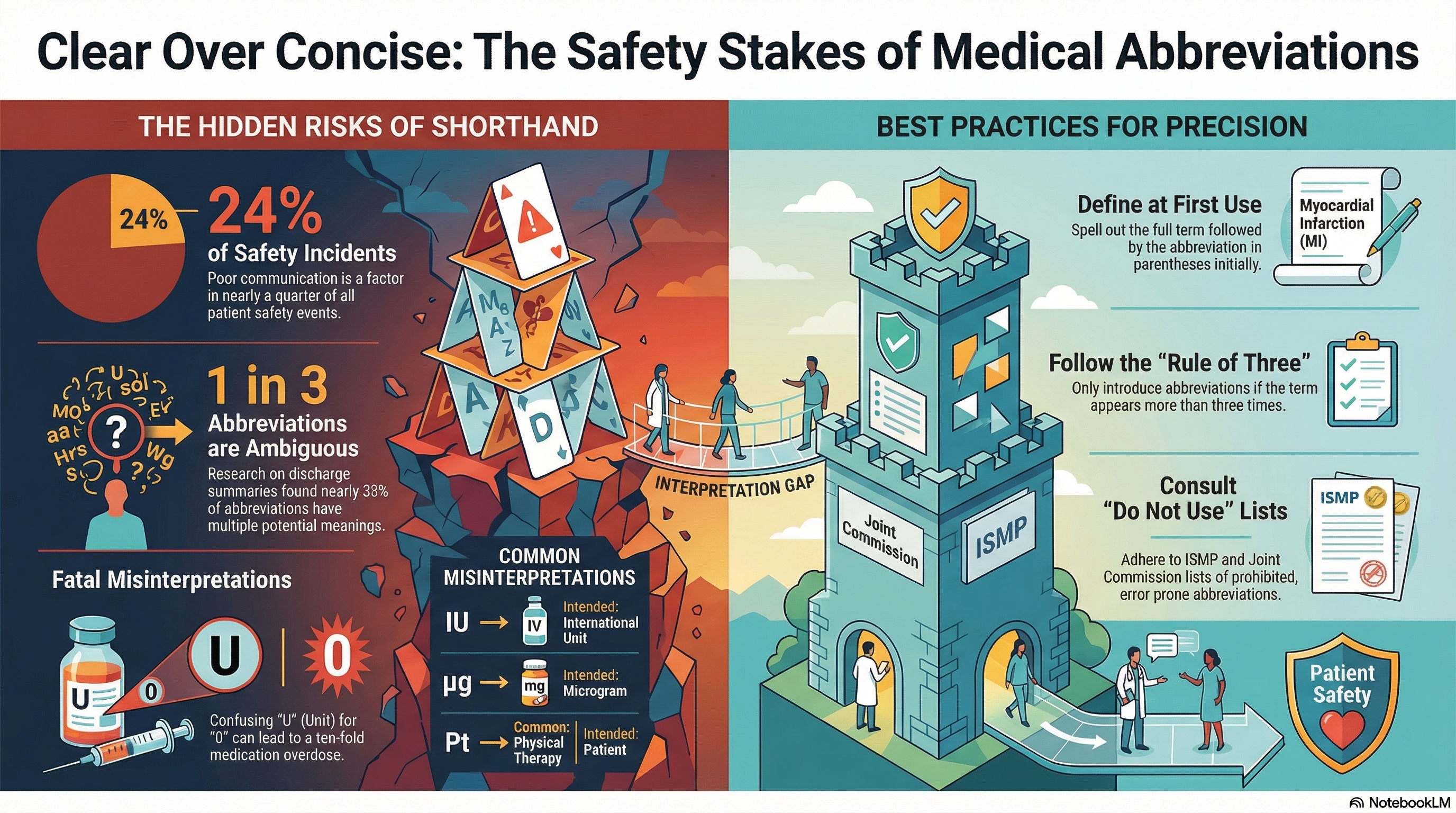
Clear communication in medical writing is critical, as inaccuracies can directly impact patient safety and scientific understanding. A systematic review published in the Annals of Internal Medicine found that poor communication contributes to 24% of patient safety incidents and, in a smaller subset of studies, is the sole identified cause in about 13.2% of such incidents. These findings emphasize the importance of precision and clarity in medical communication.
Medical communication often relies on specialized language, commonly referred to as medical jargon, which can be divided into 7 categories, with abbreviations and acronyms being the most prevalent.
This article examines the role of abbreviations in medical writing, including their common usage, key advantages, potential risks, and best practices for ensuring clear and safe scientific communication.
What Are Abbreviations in Medical Writing?
Abbreviations are shortened forms of words or phrases used to simplify lengthy and technical terminology. They are widely used across clinical documentation (e.g., patient records, prescriptions), diagnostic reports, research articles and case studies, pharmacovigilance communication, electronic health records (EHRs) and medical education.
A related concept is that of acronyms, a subset of abbreviations formed from the initial letters or syllables and pronounced as words. For example, AIDS (Acquired Immunodeficiency Syndrome) is an acronym, whereas terms like BP (blood pressure) and HR (heart rate) are standard abbreviations pronounced letter by letter. Given their widespread use, abbreviations play a central role in how medical information is recorded and communicated.
Here is a list of common medical abbreviations widely adopted in clinical
documentation.
The Role of Abbreviations in Medical Communication
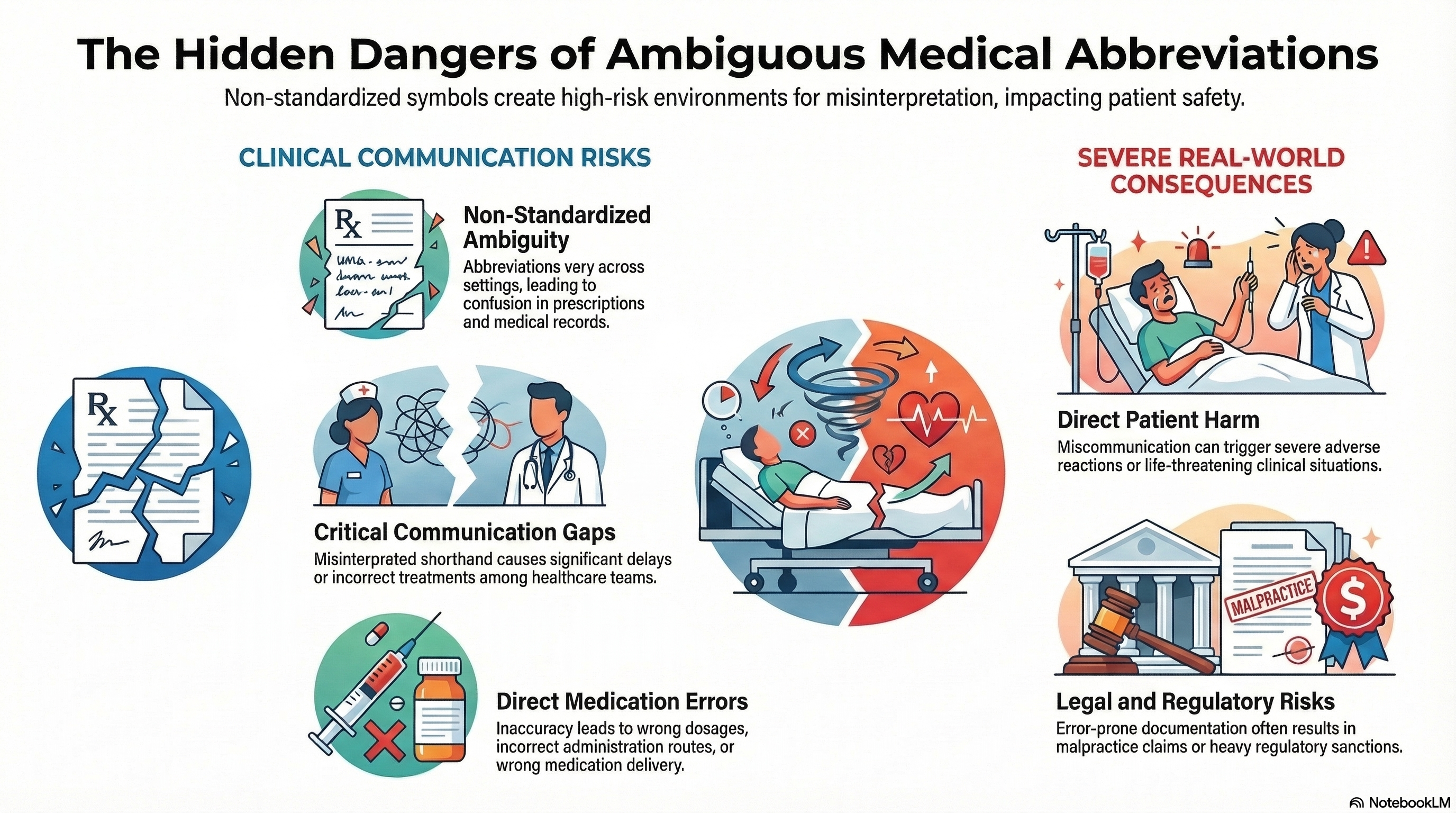
Abbreviations enhance efficiency by reducing repetition and enabling faster documentation, particularly in time-sensitive clinical settings. However, this efficiency comes with important trade-offs.
Many abbreviations are derived from Latin or Greek, and may be case-sensitive, and often lack standardization across institutions, specialties, and regions. This lack of uniformity can create confusion, especially in collaborative or international contexts. As a result, while abbreviations support brevity, they also introduce variability, making clarity a critical priority.
(Disclosure: The above image is generated using Notebook LM for illustrative purpose.)
The Risk Associated With Abbreviations:
1) Ambiguity
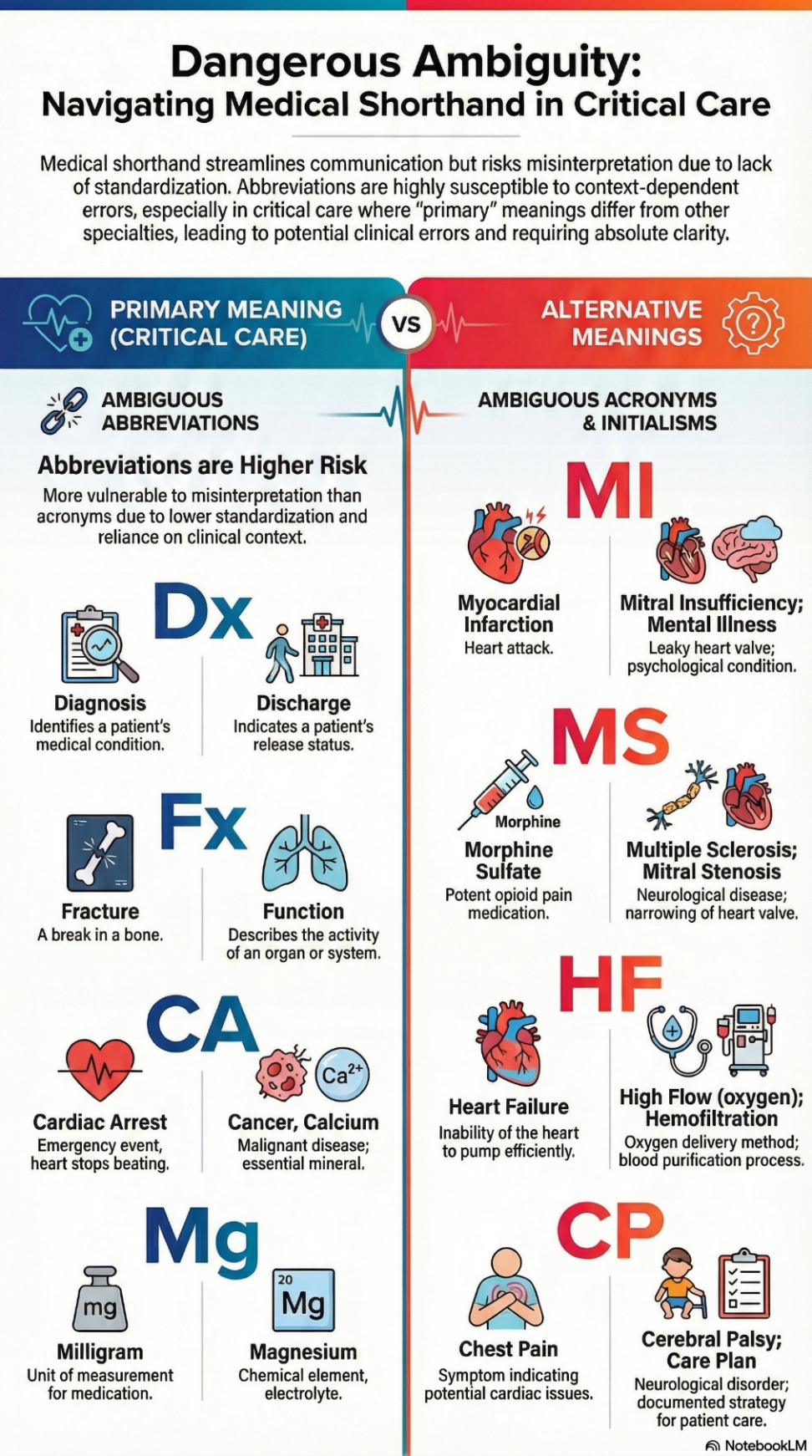
Many abbreviations are inherently ambiguous or have multiple meanings depending on clinical context.
![]() (Disclosure: The above image is generated using Notebook LM for illustrative purpose.)
(Disclosure: The above image is generated using Notebook LM for illustrative purpose.)
 (Disclosure: The above image is generated using Notebook LM for illustrative purpose.)
Evidence highlights the prevalence of ambiguity in routine medical documentation. A study of 2,336 discharge summaries found that nearly one-third of the abbreviations used were ambiguous, with Pt (patient/physiotherapy) and LFT (liver function test/lung function test) being the most common.
Similarly, another study investigating Malaysian electronic discharge summaries reported that abbreviations accounted for 19% (33,824) of total words; among these, 22.6% (7,640) were ambiguous, and over half were potentially dangerous.
This widespread ambiguity increases the risk of miscommunication, particularly in high-pressure clinical environments where rapid interpretation is required.
2) Errors in Interpretability
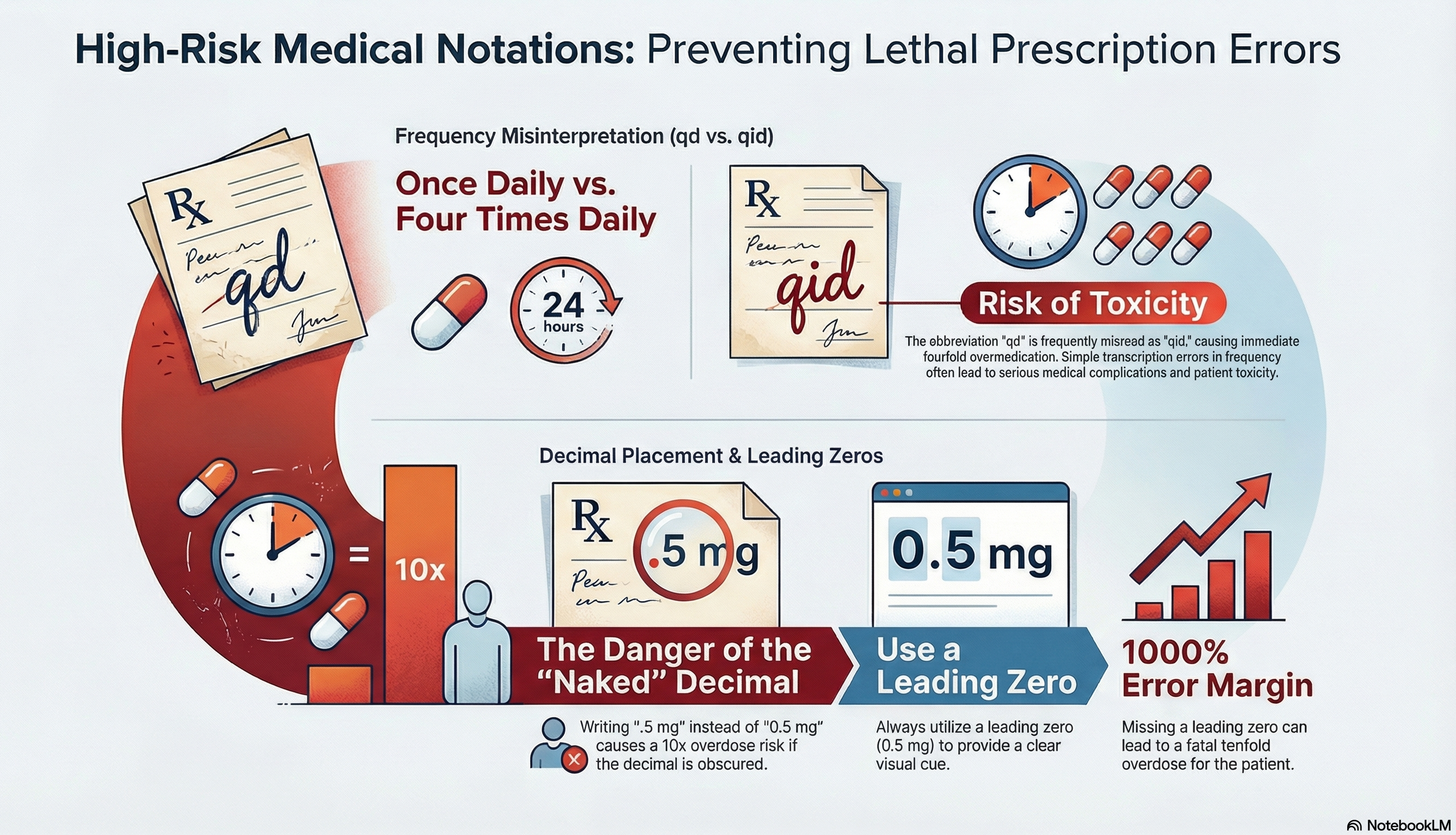
Ambiguity in medical abbreviations related to drug dosage or administration often translates into real-world clinical errors. Common error-prone medical abbreviations include:
- IU (international unit): may be confused with “IV” (intravenous)
- µg (microgram): may be confused with mg (milligram)
- U (unit): may be mistaken for “0” (zero), increasing the dose tenfold
(Disclosure: The above image is generated using Notebook LM for illustrative purpose.)
To mitigate such risks, institutions such as the Joint Commission maintain Do Not Use List, while the Institute for Safe Medication Practices (ISMP) provides List of Error-Prone Abbreviations that should be explicitly avoided.
3) Barriers to Accessibility
Abbreviations can also hinder understanding in global and multilingual contexts. Non-native English readers may struggle with unfamiliar shorthand, and abbreviations often translate poorly across languages, complicating international communication and knowledge dissemination. Different languages may even use entirely —for example, Acquired Immunodeficiency Syndrome (AIDS) is referred to as SIDA (Syndrome Immuno-Déficitaire Acquis) in French.
Even trained physicians frequently misinterpret acronyms. One study found that 75% of non-standard abbreviations had multiple definitions, and professionals correctly interpreted only 32% on average.
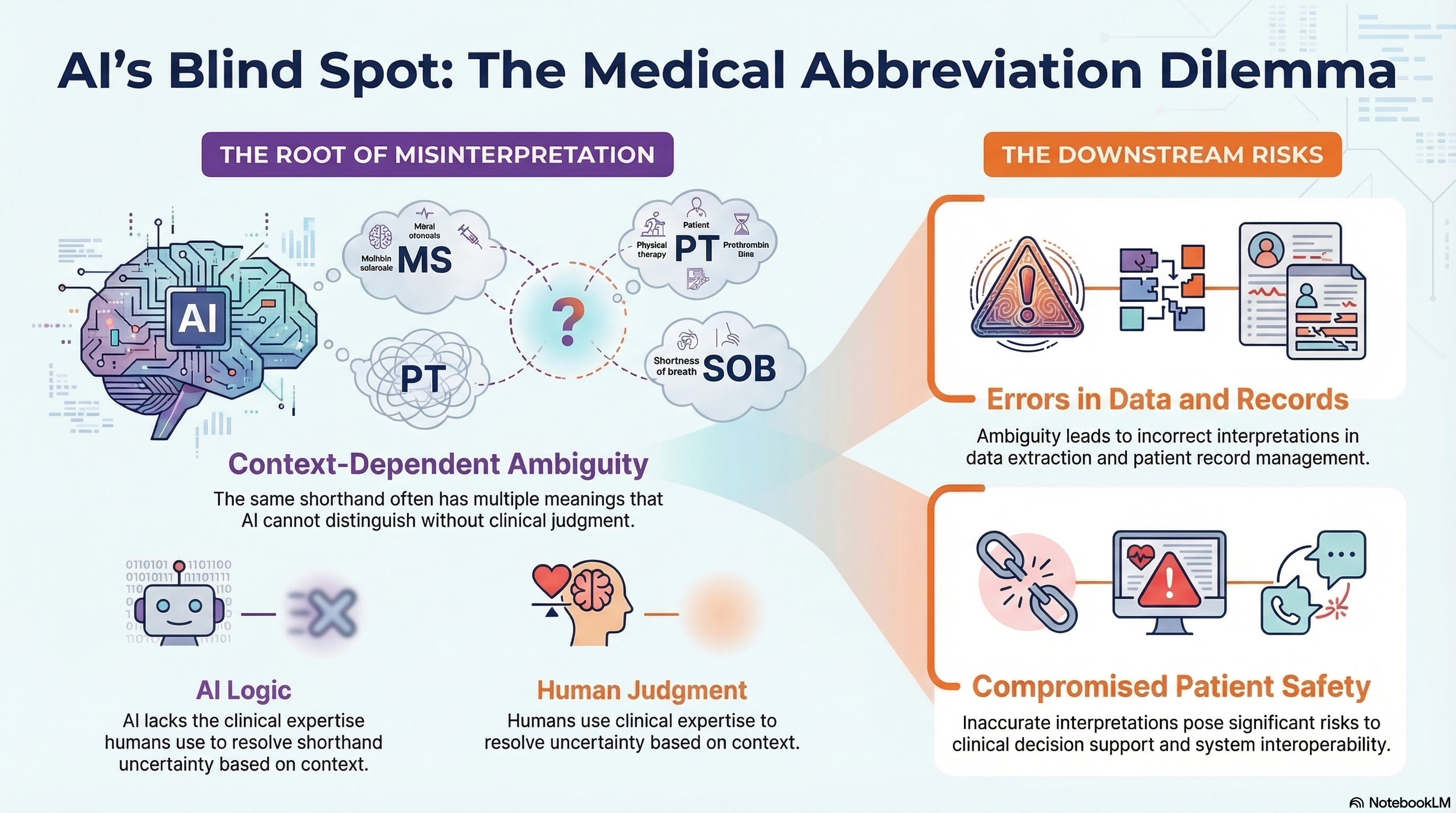
Importantly, this challenge is not limited to human readers. As healthcare becomes increasingly digital, AI systems also face similar difficulties when interpreting unclear or inconsistent abbreviations.
Challenges for Digital and AI Systems
AI in healthcare has enhanced communication through applications such as clinical decision support, EHR analysis, and AI-powered documentation using natural language processing (NLP). These systems enable real-time extraction, summarization, and interpretation of clinical data, improving workflow efficiency.
However, ambiguous abbreviations remain a persistent challenge. Terms with multiple meanings complicate text mining, literature indexing, and automated knowledge extraction, increasing the risk of misinterpretation. Although recent NLP approaches use contextual and machine learning methods for abbreviation disambiguation, their performance depends heavily on data quality and standardization. For instance, one study reported 92.1–97.1% accuracy across clinical datasets and, in a separate synthetic-snippet evaluation, higher performance than physicians (97.6% vs 88.7%) without using privacy-compromising data. Similarly, a model based on BlueBERT achieved up to 98.40% accuracy and outperformed baseline models under controlled conditions.
In real-world clinical practice, such ideal conditions are rare, and AI systems may still misinterpret abbreviations. For example, an AI scribe incorrectly expanded “Sciton BBL” as “Brazilian Butt Lift” instead of BroadBand Light therapy.
These challenges demonstrate the critical need for standardized terminology, improved data consistency, and human review to ensure safe and reliable AI-assisted medical communication.
(Disclosure: The above image is generated using Notebook LM for illustrative purpose.)
Best Practices for Using Abbreviations in Medical Writing
Given these risks, careful and strategic use of abbreviations is essential. The following best practices can help ensure clarity and safety:
1. Define Abbreviations at First Use
Always spell out the full term the first time it appears, followed by the abbreviation in parentheses. This ensures that all readers, regardless of background, understand the intended meaning.
2. Use Only Standard and Widely Accepted Abbreviations
Stick to widely accepted terms and avoid introducing new or uncommon abbreviations. Limit their use in titles and abstracts unless universally recognized (e.g., HIV, DNA).
3. Limit the Number of Abbreviations
Overuse can overwhelm readers and reduce readability. As a general rule, abbreviations should only be introduced when the term occurs a substantial number (more than three times) of times (subject to editorial discretion).
4. Avoid Ambiguous Abbreviations
Use the full term if an abbreviation has multiple meanings especially in clinical or patient-facing contexts. Clarity should always take precedence over convenience.
5. Follow Journal and Institutional Guidelines
Many journals and organizations provide specific guidance on abbreviation use. Adhering to these standards ensures consistency, improves manuscript quality, and facilitates peer review and publication.
6. Consider Your Audience
Tailor abbreviation use to the intended readership. While specialists may be familiar with certain terms, interdisciplinary or international audiences may not be.
7. Education and training
Provide education and training to healthcare professionals regarding the risks of inappropriate abbreviations and the importance of accurate communication practices.
Conclusion
In medical writing, every word carries weight, and every abbreviation is a deliberate choice that can either clarify or confuse. When used thoughtfully, abbreviations support efficiency; when used carelessly, they can obscure meaning and introduce risk. As healthcare communication becomes increasingly global and technology-driven, precision in language is no longer optional—it is essential.
The real challenge lies not in avoiding abbreviations altogether, but in using them with intent, consistency, and audience awareness. Small improvements in how we communicate can significantly influence how information is understood, applied, and trusted. When applied judiciously, abbreviations can enhance reader comprehension rather than hinder it.
A final review of abbreviations used can help ensure clarity and consistency throughout the document. Where greater precision is required, professional medical editing can provide valuable support in refining language and strengthening clarity and compliance.