
Clinical Trial Participant Communication: The Most Underfunded Line Item in Drug Development
One of my earliest responsibilities as a clinical research coordinator was sitting beside patients with an informed consent form. On paper, informed consent seemed straightforward: explain the study, discuss risks and benefits, answer questions, obtain a signature. In reality, those conversations were anything but simple.
Some patients wanted to know whether they would receive the investigational drug or a placebo. Others worried about extra hospital visits, side effects, or whether withdrawing would affect their routine care. Many quietly admitted they didn’t fully understand the document, despite having read every page.
Those conversations weren’t really about the paperwork. They were about uncertainty, trust, and helping someone make a decision they could live with.
Plain Language Improves Clinical Trial Recruitment
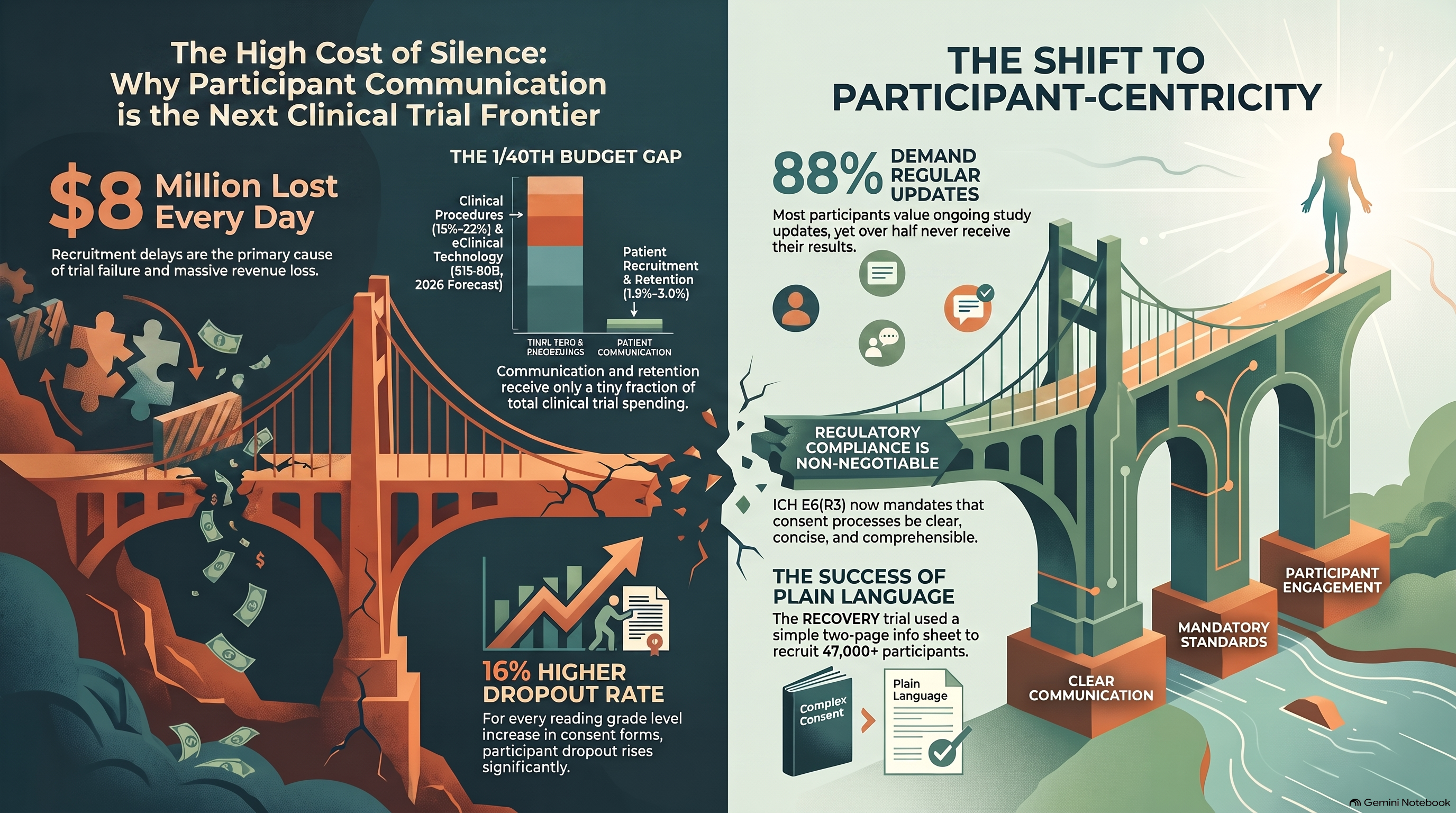
Short answer: recruitment is the single biggest cause of trial delay, and unreadable participant documents make it worse. Around 80% of trials fail to meet their initial enrolment target and timeline, at a cost of up to US $8 million per day in lost revenue [1]. Readability is one of the few enrolment variables a sponsor can change in weeks rather than quarters.
![]() Figure 1. The cost of unclear participant communication. Bracketed numerals correspond to the reference list.
Figure 1. The cost of unclear participant communication. Bracketed numerals correspond to the reference list.
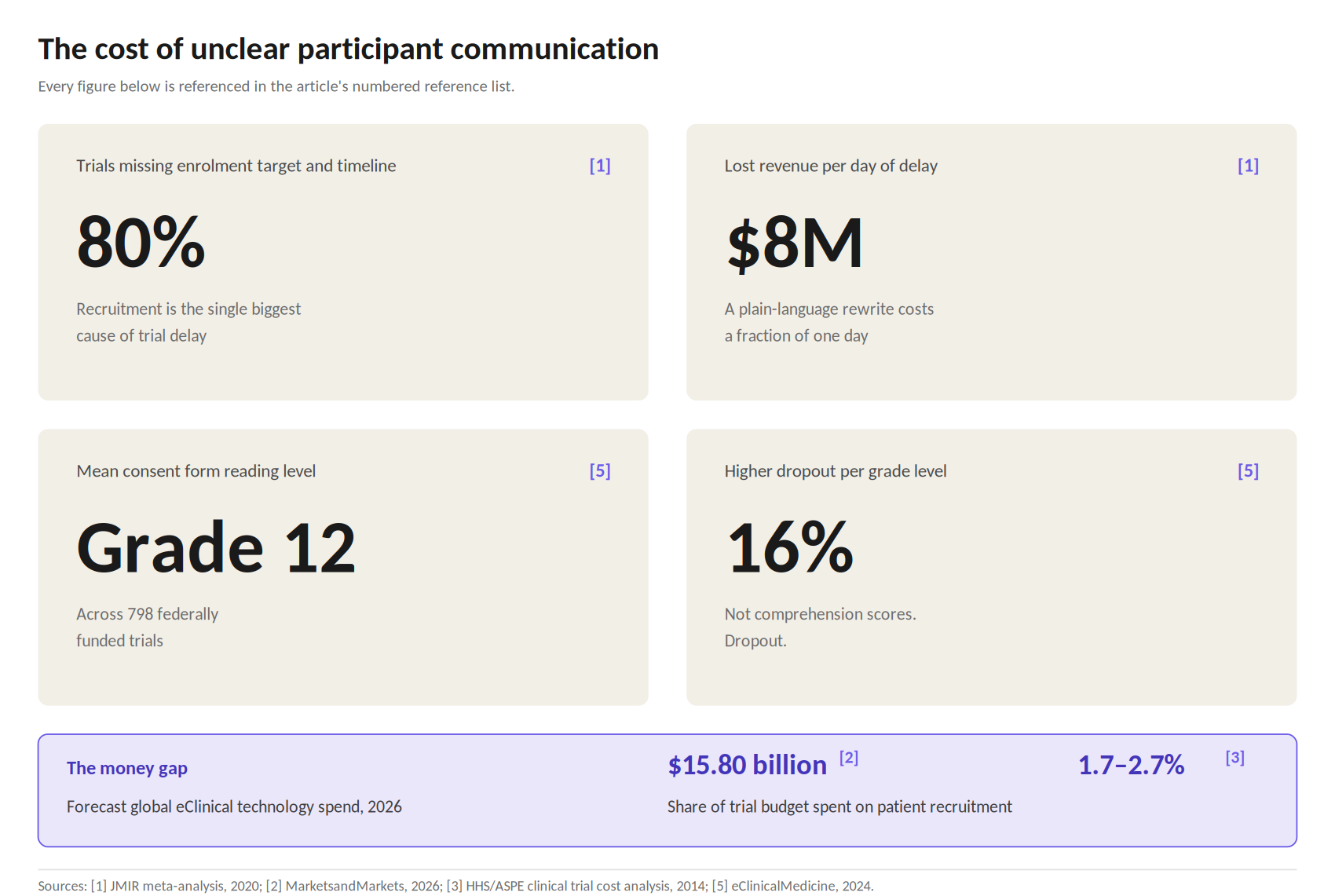 Figure 1. The cost of unclear participant communication. Bracketed numerals correspond to the reference list.
The spending pattern is easy to check. The global eClinical technology market is forecast at US $15.80 billion in 2026 [2]. In the HHS-commissioned cost analysis that still anchors most trial budget benchmarks, patient recruitment accounts for 1.7% to 2.7% of a trial’s total cost, depending on phase, and patient retention for 0.2% to 0.3% [3]. Clinical procedures take 15% to 22%. Administrative staff take 11% to 29% [3].
So everything used to find participants, explain the study to them, and keep them enrolled sits at roughly one-fortieth of a trial’s budget, against a delay cost of up to $8 million a day.
Sponsors have answered the recruitment problem with decentralized trials, digital recruitment platforms, and AI-powered patient matching. None of it answers what a prospective participant is actually asking: What am I signing up for? Can I trust this process? Will someone answer my questions after I enroll?
Sponsors measure recruitment as a single milestone. Participants experience a continuous relationship — awareness, consent, adherence, retention — connected by communication. CISCRP’s 2025 Perceptions & Insights study, a global survey of more than 12,800 patients and members of the public, found that 88% consider regular study updates somewhat or very important to their participation experience. In the same survey, 42% of participants reported receiving any results after completing a study, and 58% received none. Among those who did receive a summary of overall results, 94% found it somewhat or very helpful [4].
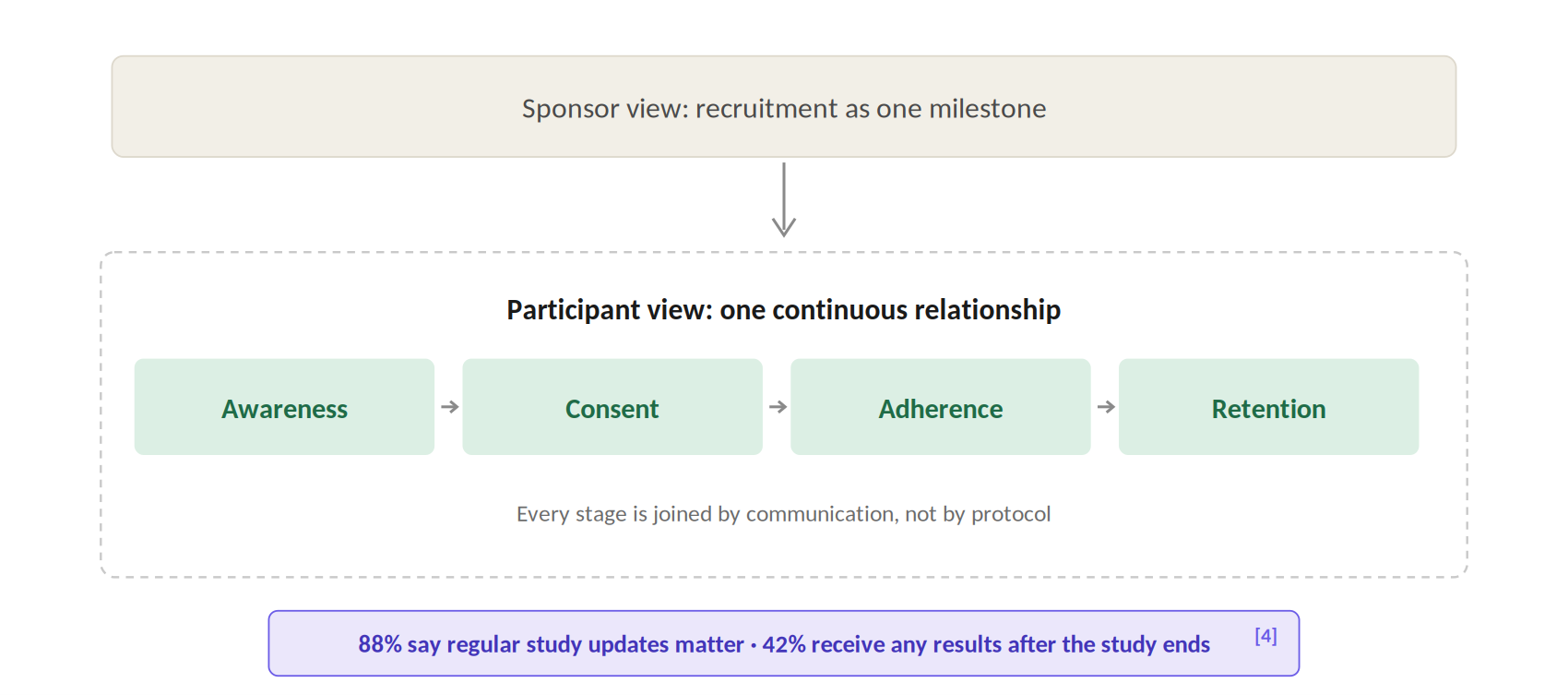
Figure 2. Sponsors measure a milestone; participants experience a relationship.
For years, the case for plain language rested on ethics. In 2024 it acquired a price tag. A retrospective analysis in eClinicalMedicine examined consent forms from 798 federally funded trials, found a mean Flesch-Kincaid reading level of grade 12, and then linked readability to outcomes: each additional grade level of reading difficulty was associated with a 16% higher dropout rate (IRR 1.16; 95% CI 1.12–1.22) [5].
Not comprehension scores. Not satisfaction surveys. Dropout.
That is the point at which participant communication stops being a support function. A consent form written in dense regulatory prose can suppress enrollment before a study opens, and a plain-language rewrite costs a fraction of one day of trial delay.
How Patient-Centered Communication Improves Clinical Trial Outcomes
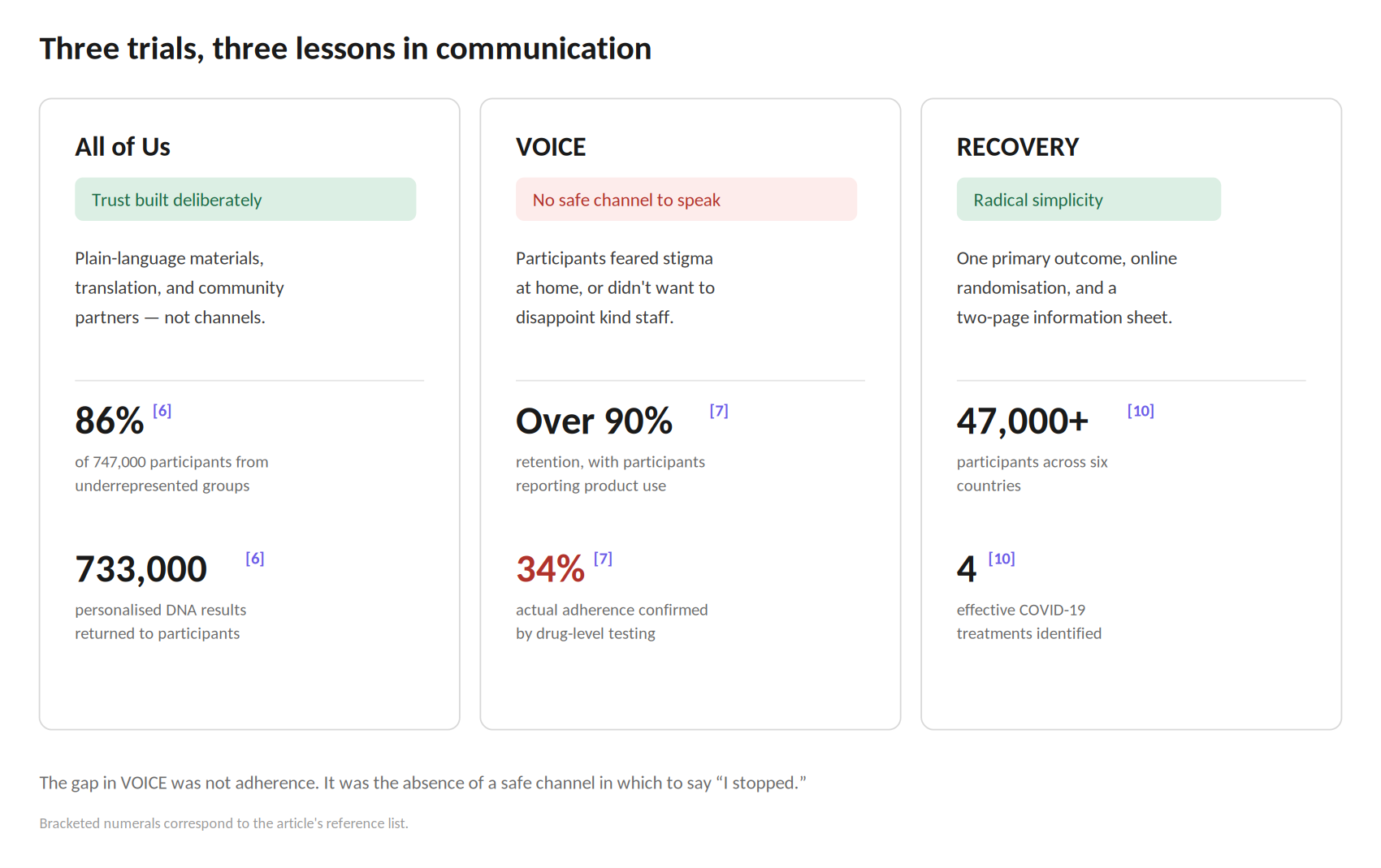
Figure 3. Three trials, three lessons in participant communication.
The NIH’s All of Us program built recruitment on trust: plain-language materials, translation, and community partners rather than channels. In its June 2026 data release, more than 645,000 of the 747,000 participants in the dataset, 86% came from communities historically underrepresented in biomedical research, and the program had returned more than 733,000 personalized DNA results to over 277,000 participants [6]. That is a writing and translation achievement, executed at scale.
The VOICE HIV-prevention trial shows the inverse. Retention exceeded 90% and participants reported taking the study product; plasma and swab testing put actual adherence near 34% [7]. Later interviews with 171 former participants found women who feared stigma at home, or who didn’t want to disappoint staff who had been kind to them [8]. The failure was the absence of a safe channel in which to say I stopped.
RECOVERY went the other way: one primary outcome, online randomisation, and a two-page patient information sheet [9]. It recruited more than 47,000 participants across six countries and identified four effective COVID-19 treatments [10].
Regulation Has Caught Up With Participant Communication
Participant-facing documents are no longer a matter of goodwill. They are regulated deliverables with named owners, review cycles, and dates.
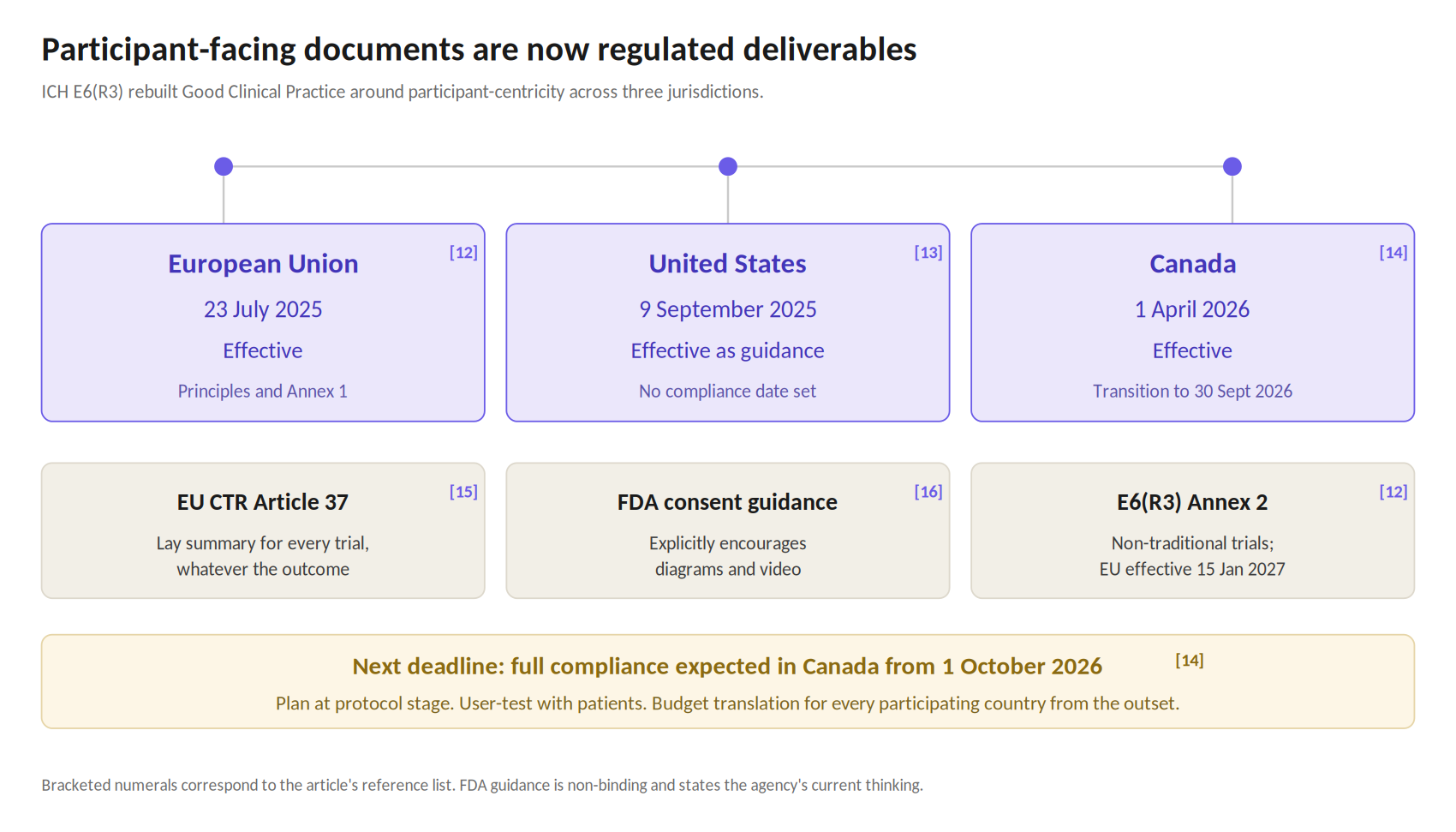
Figure 4. ICH E6(R3) effective dates by jurisdiction, with the adjacent lay summary and consent requirements.
ICH E6(R3) rebuilt Good Clinical Practice around participant-centricity and requires consent processes that are clear and comprehensible [11]. The overarching principles and Annex 1 became effective in the EU on 23 July 2025 [12]. FDA published the final guidance on 9 September 2025, though it has not set a formal US compliance date [13]. Health Canada’s adoption became effective on 1 April 2026, with a six-month implementation window closing 30 September 2026 and full compliance expected from 1 October 2026 [14]. Annex 2, covering non-traditional interventional trials, comes into effect in the EU on 15 January 2027 [12].
Two adjacent requirements point the same way. EU CTR Article 37 requires a lay summary of trial results for every trial, whatever the outcome [15]. FDA’s informed consent guidance explicitly encourages diagrams and video [16].
Read together, these are not compliance line items to be closed out. They change who owns the consent form, the participant information sheet, and the lay summary, and when those documents enter a study plan. If they are still being drafted in the weeks before first patient in, there is no room left for user testing with patients, and no room for clinical trial translation into every participating country’s language.
| The Canadian transition window closes on 30 September 2026. If your E6(R3) readiness plan does not yet name an owner for participant-facing documents, that is the gap worth closing first. Enago Life Sciences works with sponsors on plain-language consent, lay summaries, and multilingual participant materials — talk to our medical communications team. |
Every Conversation Matters
I no longer see those consent discussions as administrative tasks. They were the first step in building a relationship between a participant and a research team.
For the sponsors who plan and fund trials, the useful question is not whether participant communication matters. The evidence on that is settled. The question is whether anyone owns it, at what point in the protocol it appears, and what it is budgeted at? Because for the person being asked to join, it begins with a conversation, and the quality of that conversation determines whether they enroll, and whether they stay.
Frequently Asked Questions
Q. What reading level should a clinical trial consent form target?
A. Most IRBs recommend an eighth-grade reading level, which is close to the average US adult reading level. In practice, consent forms for federally funded trials average grade 12, and each grade level above that is associated with a 16% higher dropout rate [5].
Q. Does ICH E6(R3) require plain-language consent?
A. E6(R3) requires that the informed consent process and its documentation be clear, concise, and comprehensible to the participant [11]. It does not specify a readability score, which means sponsors are expected to demonstrate comprehensibility rather than certify a metric.
Q, When does a lay summary of results have to be provided?
A. Under EU CTR Article 37, a summary of results written for laypersons must be submitted for every trial conducted in the EU, regardless of outcome, within the timelines set out in the Regulation [15]. The European Commission’s Good Lay Summary Practice guidance sets out the expected structure and language level.
References
- Brøgger-Mikkelsen, Mette, Zarqa Ali, John R. Zibert, Anders Daniel Andersen, and Simon Francis Thomsen. “Online Patient Recruitment in Clinical Trials: Systematic Review and Meta-Analysis.” Journal of Medical Internet Research 22, no. 11 (2020): e22179. https://doi.org/10.2196/22179
- MarketsandMarkets. eClinical Solutions Market: Global Forecast to 2031. Accessed August 11, 2026. https://www.marketsandmarkets.com/Market-Reports/eclinical-solutions-market-553.html
- Sertkaya, Aylin, Anna Birkenbach, Ayesha Berlind, and John Eyraud. Examination of Clinical Trial Costs and Barriers for Drug Development. Prepared for the Office of the Assistant Secretary for Planning and Evaluation, U.S. Department of Health and Human Services. Lexington, MA: Eastern Research Group, July 25, 2014. https://aspe.hhs.gov/reports/examination-clinical-trial-costs-barriers-drug-development-0
- Sine, Shalome, and Annick de Bruin. “It’s a Fact: Sharing Clinical Trial Results with Participants Builds Trust.” Clinical Leader, May 14, 2026. Reporting findings of the Center for Information and Study on Clinical Research Participation, 2025 Perceptions and Insights Study. Accessed August 11, 2026. https://www.clinicalleader.com/doc/it-s-a-fact-sharing-clinical-trial-results-with-participants-builds-trust-0001
- Mirza, Fatima N., Eric Wu, Hael F. Abdulrazeq, Ian D. Connolly, Oliver Y. Tang, Cheryl K. Zogg, et al. “The Literacy Barrier in Clinical Trial Consents: A Retrospective Analysis.” eClinicalMedicine 75 (September 2024): 102814. https://doi.org/10.1016/j.eclinm.2024.102814
- National Institutes of Health. “NIH’s All of Us Research Program Is Now the Largest Integrated Genomics and Health Database in the World.” News release, June 30, 2026. Accessed August 11, 2026. https://www.nih.gov/news-events/news-releases/nihs-all-us-research-program-now-largest-integrated-genomics-health-database-world
- van der Straten, Ariane, Elizabeth R. Brown, Jeanne M. Marrazzo, Michael Z. Chirenje, Karen Liu, Kailazarid Gomez, Mark A. Marzinke, Jeanna M. Piper, and Craig W. Hendrix. “Divergent Adherence Estimates with Pharmacokinetic and Behavioural Measures in the MTN-003 (VOICE) Study.” Journal of the International AIDS Society 19, no. 1 (2016): 20642. https://www.ncbi.nlm.nih.gov/pmc/articles/PMC4744323/
- Montgomery, Elizabeth T., Barbara Mensch, Petina Musara, Miriam Hartmann, Kubashni Woeber, Juliane Etima, and Ariane van der Straten. “Misreporting of Product Adherence in the MTN-003/VOICE Trial for HIV Prevention in Africa: Participants’ Explanations for Dishonesty.” AIDS and Behavior 21, no. 2 (2017): 481–91. https://doi.org/10.1007/s10461-016-1609-1
- Nuffield Department of Population Health, University of Oxford. “How to Set Up a Trial in Nine Days.” Accessed August 11, 2026. https://www.ndph.ox.ac.uk/longer-reads/how-to-set-up-a-trial-in-nine-days
- RECOVERY Trial. “The RECOVERY Trial Is Two Years Old Today.” March 23, 2022. Accessed August 11, 2026. https://www.recoverytrial.net/news/the-recovery-trial-is-two-years-old-today
- International Council for Harmonisation of Technical Requirements for Pharmaceuticals for Human Use. Guideline for Good Clinical Practice E6(R3). Step 4 version, January 6, 2025. https://database.ich.org/sites/default/files/ICH_E6%28R3%29_Step4_FinalGuideline_2025_0106.pdf
- European Medicines Agency. “ICH E6 Good Clinical Practice — Scientific Guideline.” Accessed August 11, 2026. https://www.ema.europa.eu/en/ich-e6-good-clinical-practice-scientific-guideline
- U.S. Food and Drug Administration. “E6(R3) Good Clinical Practice; International Council for Harmonisation; Guidance for Industry; Availability.” Federal Register 90 (September 9, 2025). https://www.federalregister.gov/documents/2025/09/09/2025-17311/e6r3-good-clinical-practice-international-council-for-harmonisation-guidance-for-industry
- Health Canada. Guidance Document: Part C, Division 5 of the Food and Drug Regulations, “Drugs for Clinical Trials Involving Human Subjects” (GUI-0100). Accessed August 11, 2026. https://www.canada.ca/en/health-canada/services/drugs-health-products/compliance-enforcement/good-clinical-practices/guidance-documents/guidance-drugs-clinical-trials-human-subjects-gui-0100.html
- European Commission, Clinical Trials Expert Group. Good Lay Summary Practice. EudraLex Volume 10. Brussels: European Commission, October 4, 2021. https://health.ec.europa.eu/system/files/2021-10/glsp_en_0.pdf
- U.S. Food and Drug Administration. Informed Consent: Guidance for Institutional Review Boards, Clinical Investigators, and Sponsors. Silver Spring, MD: FDA, August 2023. https://www.fda.gov/regulatory-information/search-fda-guidance-documents/informed-consent
Author:

Rebecca D’souza, PhD.
Associate Content Expert, Enago Academy
Connect with Rebecca on LinkedIn