

Writing Case Reports that Influence Clinical Practice: Dos and don’ts

Every great medical breakthrough began with one patient, one observation, one moment of curiosity. Think of history’s landmark case reports: the first identification of HIV/AIDS and the initial observations of thalidomide-induced birth defects. Each began as a single narrative that stood as a landmark for future studies and reshaped medical understanding.
Why Clinicians Should Write a Case Report Today?
A case report is more than just a record! It’s the story of a single patient’s clinical journey, told with enough detail and insight to inform others. It differs from case series or cohort studies because it focuses deeply on one case that challenges assumptions or reveals something new.
Importance of Case Reports
Case reports help to:
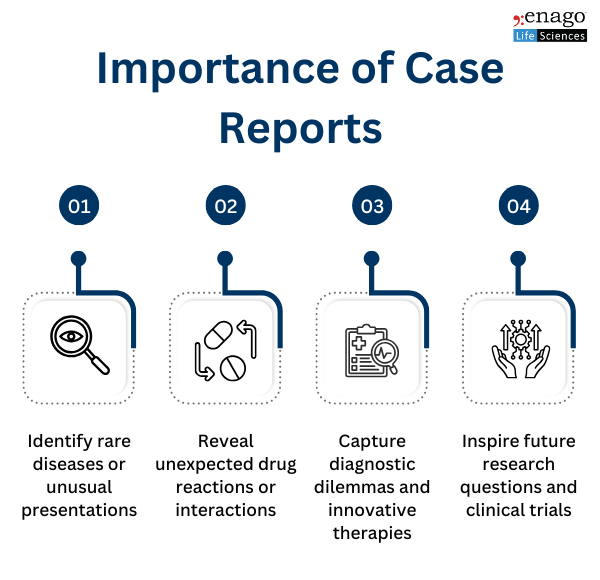
In essence, they act as a bridge between clinical experience and scientific advancement. And writing one effectively means learning to build that bridge with structure, integrity, and insight. Journals look for submissions that blend novelty, rigor, and clinical relevance.
What Makes a Case Report Influential?
The CARE Guidelines
Start with the CARE (CAse REport) checklist, the global benchmark for transparent and complete reporting. It ensures your case is structured, ethical, and reproducible.
The Anatomy of Impact
To be truly influential, your report should deliver on four fronts:
- Novelty: Does it present something genuinely new—a rare presentation, unexpected association, or innovative management approach?
- Clinical Relevance: Will it change how a clinician might approach a similar patient tomorrow?
- Educational Value: Does it provide a “clinical pearl” readers can remember?
- Rigor: Are the diagnostics, reasoning, and follow-up thorough and credible?
Pre-Writing Essentials – The “Dos”
1. Choose the Right Case
The strongest case reports begin with an “Aha!” moment. Maybe it’s an unexpected response to therapy, a puzzling symptom, or a side effect that shouldn’t have happened. Ask yourself:
- Does this case reveal something new or thought-provoking?
- Does it highlight a diagnostic or therapeutic challenge?
- Could it teach others something valuable about clinical reasoning?
Avoid cases that are too routine, poorly documented, or lack follow-up. A compelling story needs both substance and detail.
2. Keep Ethics at the Core
Every patient’s story is a privilege to tell. Treat it with the utmost respect.
- Informed Consent: Always obtain written consent for publication. This isn’t optional, rather ethical and often legally required.
- Anonymization: Go beyond removing names. Eliminate dates, locations, or any identifiers that could lead to “jigsaw identification.”
- Patient Dignity: Avoid dramatizing outcomes or labeling results as “miraculous” or “path-breaking.” Focus on clinical facts and the science.
- Institutional Review Boards Approval: Typically waived for single-patient reports, but confirm with your institution.
Writing the Case Report – Section by section
1. Title & Abstract: Your first impression
The title is your report’s calling card. Keep it factual, specific, and searchable.
Example: “Severe Hypoglycemia Induced by Ciprofloxacin in a Patient with Type 2 Diabetes: A Case Report.”
The abstract should function as a miniature version of your report:
- Background: 1 sentence of context.
- Case Presentation: 2–3 sentences summarizing patient, diagnosis, intervention, and outcome.
- Conclusion: 1 sentence capturing the main learning point.
2. Introduction: Setting the stage
A good introduction doesn’t just state the facts, it builds curiosity. For an effective introduction, use the classic funnel approach:
- Start broad—what’s known about this condition?
- Narrow down—what remains uncertain or rare?
- Focus on the case and explain why it matters.
3. Case Presentation: The patient’s story
This section is the heart of your report. Tell the story clearly, chronologically, and objectively. Include:
- De-identified demographics and chief complaint.
- Clinical history—presenting symptoms, past history, social background.
- Physical exam findings.
- Diagnostic work-up with rationale and differential diagnoses.
- Management, response, and follow-up.
Include visuals—radiographs, lab results, or pathology slides with proper labels to enhance clarity and authenticity.
4. Discussion: Turning story into science
Move from describing what happened to explaining why it matters. Structure it logically:
- Summary: A concise recap of the main finding.
- Literature Review: Compare your case to others and identify the emerging patterns or contrasts
- Mechanism or Explanation: Offer a plausible rationale for the event or outcome.
- Limitations: Be transparent as case reports can’t prove causation, only highlight possibilities.
- Clinical Pearls: End with 2–3 actionable takeaways.
5. Conclusion & References
Keep the conclusion brief: one or two sentences summarizing the case’s key lesson. Then, back up your discussion with current, high-quality references formatted to your target journal’s style.
Common Pitfalls – The “Don’ts”
Even strong cases fail if they fall into these traps:
- Don’t Overclaim: A single case doesn’t prove causation—say “This suggests…” rather than “This confirms…”
- Don’t Ignore Guidelines: CARE compliance and structure aren’t optional—they’re the backbone of credibility.
- Don’t Breach Confidentiality: Partial anonymization is not enough. Protect your patient as you’d protect your own reputation.
- Don’t Sensationalize: Avoid “first ever” or “miracle cure” language.
- Don’t Neglect the Discussion: Without interpretation, even the best-documented case remains just a story.
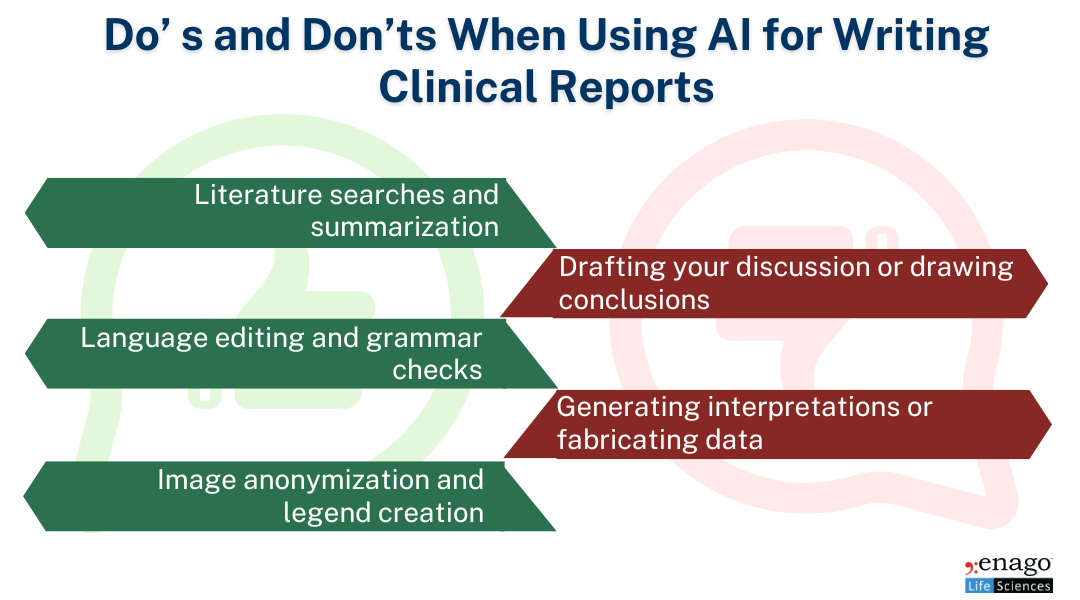
Case Report Writing in the AI Era
Artificial intelligence can help in the process of writing case reports, but only when used responsibly. Also, ensure to check the journal’s guidelines on permissible AI use and disclosure.
A single, well-documented case can shape clinical thinking, challenge established norms, and even inspire future research breakthroughs. Case reports remind us that progress in medicine often begins with one patient, one observation, and one curious clinician willing to share their story. When written with rigor, empathy, and clarity, your case report becomes more than documentation—it becomes part of medical history.
Writing is only half the journey. Enago Life Science’s expert medical writers and editors can help you ensure your case report meets international standards and journal requirements—so your story makes the impact and garners attention it deserves.
Author:

Anagha Nair
Editorial Assistant, Enago Academy
Medical Writer, Enago Life Sciences
Connect with Anagha on LinkedIn