

The Rise of Value-Based Healthcare and Its Impact on Scientific Communication

Introduction
Healthcare delivery is undergoing a profound transformation. Traditionally, systems rewarded providers for the volume of services delivered-tests, procedures, and consultations. Today, the focus is shifting toward value-based healthcare (VBHC), which emphasizes maximizing patient outcomes relative to costs (1,2). This paradigm not only changing clinical practice but also influencing how scientific evidence is generated, shared, and interpreted (3).
The Rise of Value-Based Healthcare
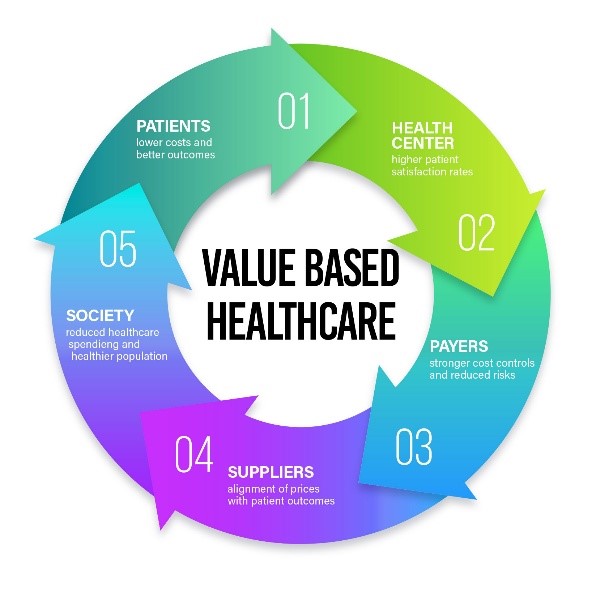
VBHC is built on the principle of achieving the best possible health outcomes per unit of cost. According to a global scoping review, VBHC initiatives are being piloted across multiple countries, though most remain at early stages of implementation (2). The World Health Organization highlights VBHC as a key strategy for enhancing accountability, efficiency, and sustainability in health systems (3).
Key drivers of VBHC:
- Rising healthcare costs and the need for sustainability.
- Patients’ demand for personalized, outcome-focused care.
- Policy reforms linking reimbursement to measurable improvements in health.
Impact on Scientific Communication
The rise of VBHC is reshaping the way scientific findings are communicated in several important ways:
1. Outcome-Oriented Research
Traditional research often emphasized clinical processes or service utilization. VBHC requires robust outcome measures such as quality of life, functional recovery, and patient satisfaction (2). Scientific communication must now highlight real-world impact, ensuring findings are relevant to both clinicians and policymakers (1).
2. Interdisciplinary Collaboration
VBHC integrates medicine, economics, and public health (3). This demands scientific communication that bridges disciplines, using accessible language for diverse audiences—clinicians, economists, policymakers, and patients.
3. Transparency and Data Sharing
VBHC depends on transparent reporting of outcomes and costs. Journals and conferences increasingly emphasize open-access data and reproducibility, ensuring that findings can inform policy and practice across borders (1,3).
4. Patient-Centered Narratives
Scientific communication is shifting from technical jargon to patient-centered storytelling (2). Case studies and real-world evidence are becoming central, making research more relatable and actionable for non-specialist audiences.
5. Policy and Public Engagement
VBHC research often informs health policy decisions (3). Medical writers must adopt communication styles to engage policymakers and the public, ensuring evidence translates into practice and supports systemic reforms.
Future Directions
Looking ahead, VBHC will continue to reshape scientific communication:
- Digital health tools will enhance outcome tracking and reporting.
- AI-driven analytics may standardize outcome measures, improving comparability across studies.
- Global collaboration will be essential, as VBHC principles spread across diverse healthcare systems.
Ultimately, VBHC is not just a clinical reform, it is a communication revolution. By emphasizing outcomes, transparency, and patient-centered narratives, it is redefining how science informs practice and policy (1-3).
References
- JAMA Health Forum. 2022. “Global Adoption of Value-Based Health Care Initiatives Within Health Systems.” JAMA Health Forum 3(6).
- Frontiers in Public Health. 2021. “Implementing Value-Based Healthcare: A Scoping Review.” Frontiers in Public Health
- World Health Organization (WHO). 2023. A Global Review of Value-Based Care: Theory, Practice and Lessons Learned. Geneva: World Health Organization.

Asif Syed, PharmD
Senior Scientific Writer II
Connect with Asif on LinkedIn