
Mapping and Assessing Real-World Evidence Studies on Diabetes in India (2021–2025)
Introduction
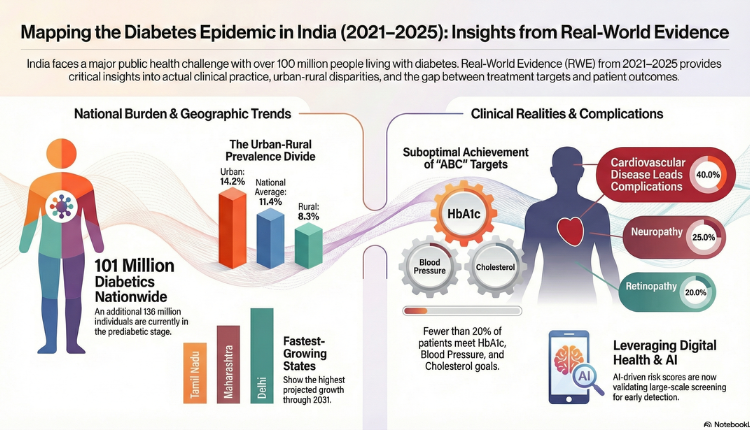
India is home to the second-largest population of people living with diabetes globally. Recent estimates suggest that more than 100 million individuals have diabetes, while another 136 million are in the prediabetic stage (1). What was once considered a lifestyle condition has now become a major public health challenge, affecting workforce productivity, healthcare spending, and long-term quality of life.
Despite advances in diabetes research, evidence from randomized trials often lacks generalizability to real-world clinical practice. In this context, real-world evidence (RWE) has emerged as a powerful tool. Unlike randomized clinical trials, RWE draws from routine clinical practice, registries, insurance databases, digital platforms, and community-based surveys. These data provide insights into how diabetes is diagnosed, treated, and managed in clinical settings.
Between 2021 and 2025, India witnessed a rapid increase in RWE studies focused on diabetes, covering disease burden, treatment patterns, complications, and the growing role of digital health. This blog maps and assesses key RWE findings from this period, highlighting emerging trends, gaps, and policy implications.
National-Level Real-World Evidence Studies
1. Key Findings ICMR-INDIAB Study (2023)
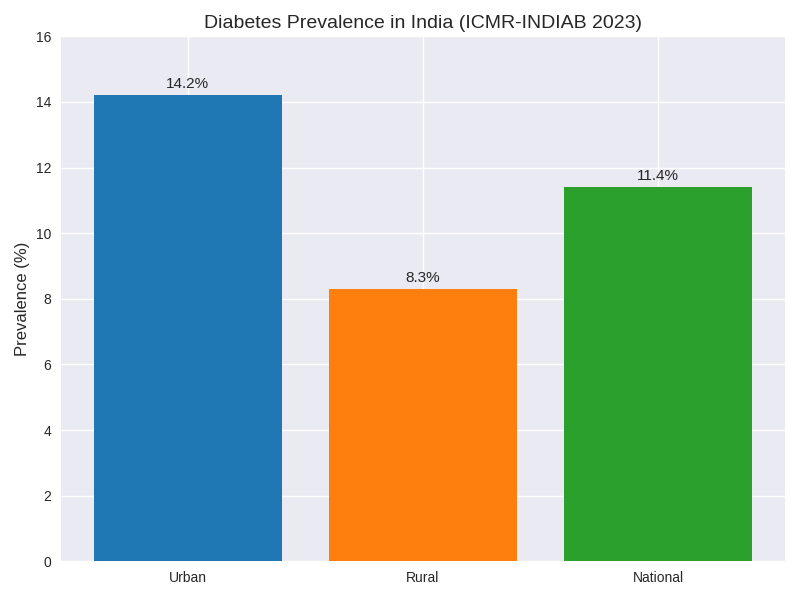
The ICMR-INDIAB study is the largest population-based diabetes survey conducted in India, covering 31 states and union territories (1).
The study demonstrated a widening urban–rural divide and the strong association between diabetes, obesity, and hypertension, while also highlighting underdiagnosis in rural areas (1).
2. Global Burden of Disease (GBD) India Analysis (2025)
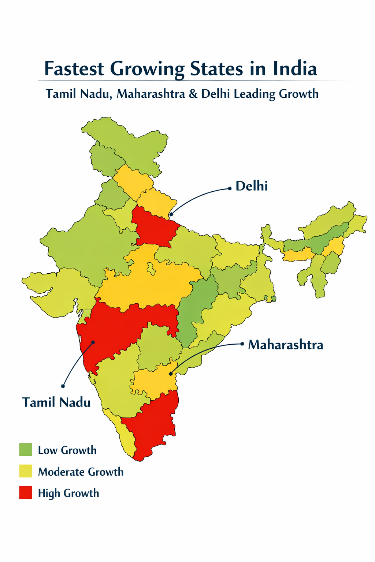
The GBD India analysis provided state-wise projections of diabetes burden across India (2). According to the GBD analysis, diabetes prevalence is expected to rise sharply by 2031. States such as Tamil Nadu, Maharashtra, and Delhi show the fastest growth. The projections predicted in the analysis support long-term healthcare planning and resource allocation at the state level (2).
Emerging Trends in RWE (2021–2025)
A. Evidence-Based Clinical Targets:
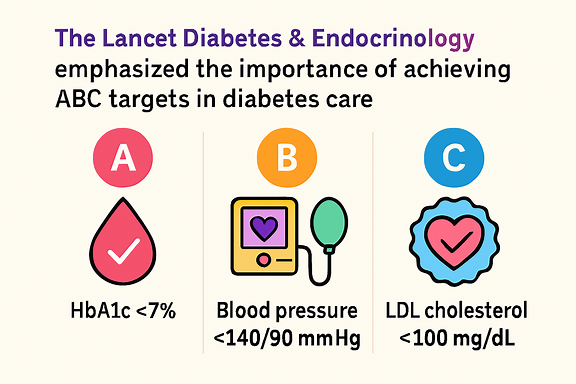
However, Indian RWE studies show that fewer than 20% of patients achieve all three targets, reflecting gaps in adherence and follow-up care (3).
B. Digital Health Integration
The adoption of digital tools has accelerated diabetes management in India. RWE highlights the use of mobile apps for glucose tracking, telemedicine consultations, and AI-driven models for early detection of complications. Apollo Hospitals has validated an AI-based diabetes risk score using real-world clinical data, demonstrating feasibility for large-scale screening (5).
C. Focus on Complication Reduction
The India@100 initiative outlined national targets, including halving amputations, diabetes-related blindness, and delaying the onset of dialysis by at least 5 years (4). RWE studies are increasingly used to monitor progress toward these outcomes .
D. Rural–Urban Disparities
RWE consistently reports lower diagnosis rates and delayed treatment initiation in rural populations due to limited screening, drug availability issues, and fewer trained healthcare professionals(1). These findings emphasize the need for decentralized diabetes care models supported by community registries.
E. Treatment Outcomes
Real-world data suggest that insulin initiation is often delayed by 3–5 years after diagnosis. Oral antidiabetic drugs remain first-line therapy, yet adherence rates are below 60%, compromising glycemic control (1,3).
F. Complications
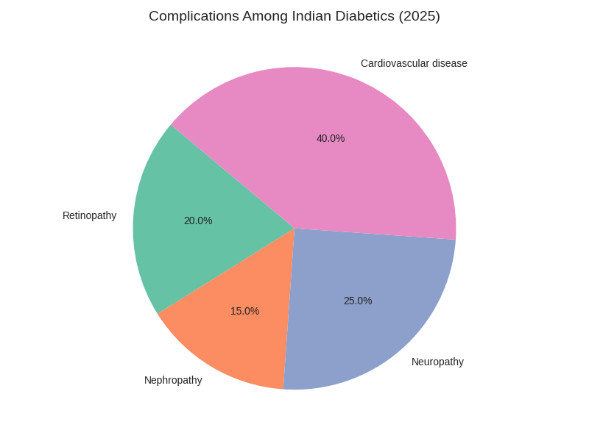
Late detection remains common due to inconsistent screening and limited access to specialists(1,2).
Policy and Practice Implications should include:
- Strengthening Primary Care
- Integrating diabetes screening into routine outpatient visits.
- Training primary care physicians in guideline-based management.
- Insurance and Affordability
- Expanding coverage for insulin and oral hypoglycemics.
- Subsidizing diagnostic tests such as HbA1c and lipid profiles.
- Using ASHA workers for data collection and follow-up in a rural set-up
- Developing state-level diabetes registries for longitudinal tracking.
Future Directions
Real-world evidence generated between 2021 and 2025 has transformed the understanding of diabetes in India. These studies revealed rising prevalence, suboptimal achievement of clinical targets, expanding digital health opportunities, and persistent rural–urban gaps. Leveraging RWE will be essential for designing policies that reduce complications, improve outcomes, and ensure equitable diabetes care nationwide. Further, RWE will increasingly shape diabetes care through precision medicine, AI-based prediction of complications, stronger policy integration, and greater global collaboration in data sharing.
Note: The image featured in this article is generated using NotebookLM for illustration purposes.
References
- Anjana RM, Pradeepa R, Deepa M, et al. ICMR-INDIAB Study: Prevalence of diabetes in India. Journal of the Indian Institute of Science. 2023.
- Global Burden of Disease India Collaborators. State-level burden of diabetes in India. Frontiers in Endocrinology. 2025.
- Lancet Diabetes & Endocrinology. Achievement of ABC targets in type 2 diabetes. 2022.
- Government of India. India@100 Initiative: Diabetes care projections and complication reduction goals. 2025.
- Apollo Hospitals Group. Validation of an AI-based diabetes risk score in real-world settings. 2024.
Author:

Asif Syed, PharmD
Senior Scientific Writer II
Connect with Asif on LinkedIn